Visual:华子毅(Kaylyn)
Audio:刘辰(Liusancai/Nechuil)
创作时间
2023.8
潮気:石の老人と海


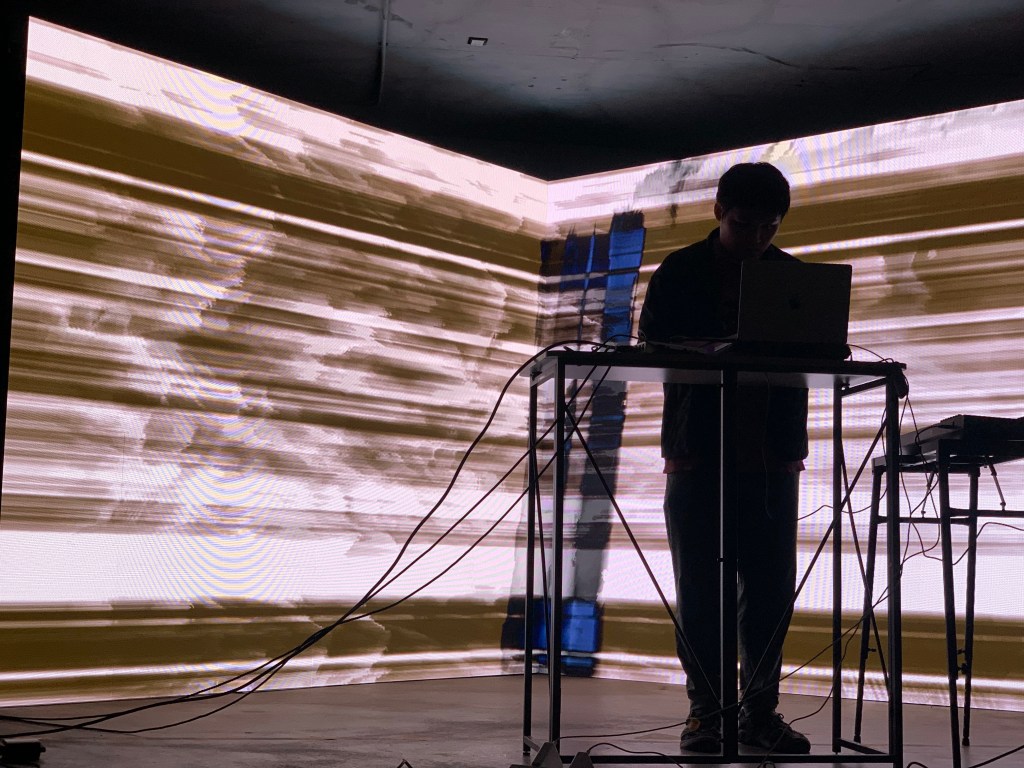
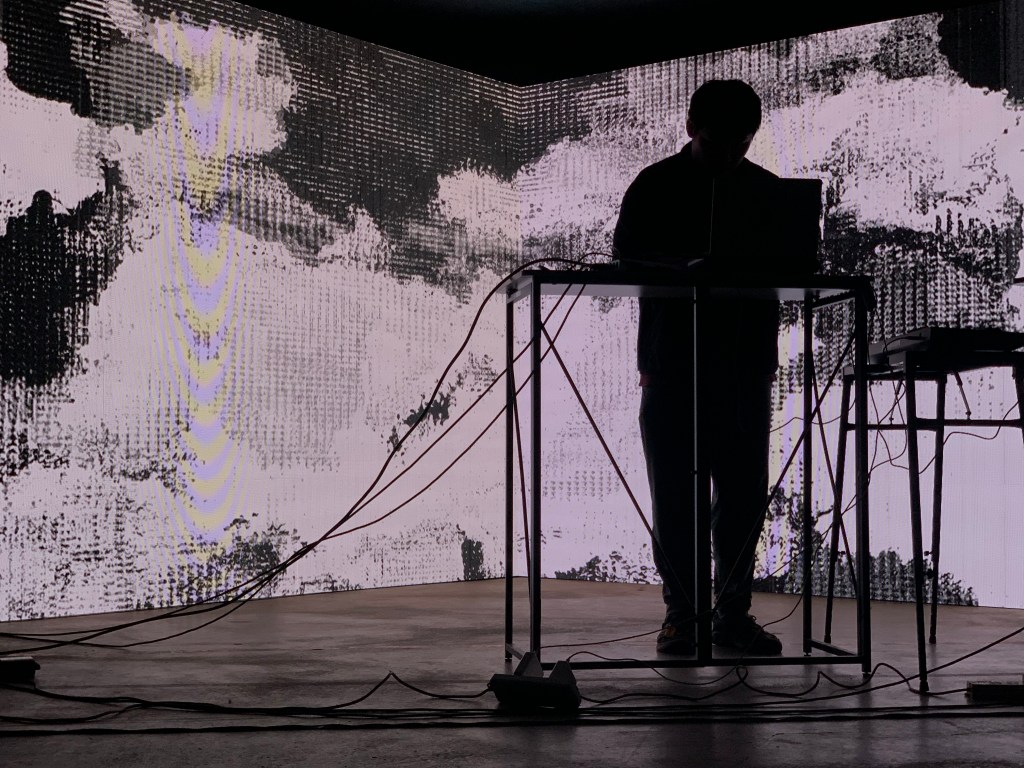
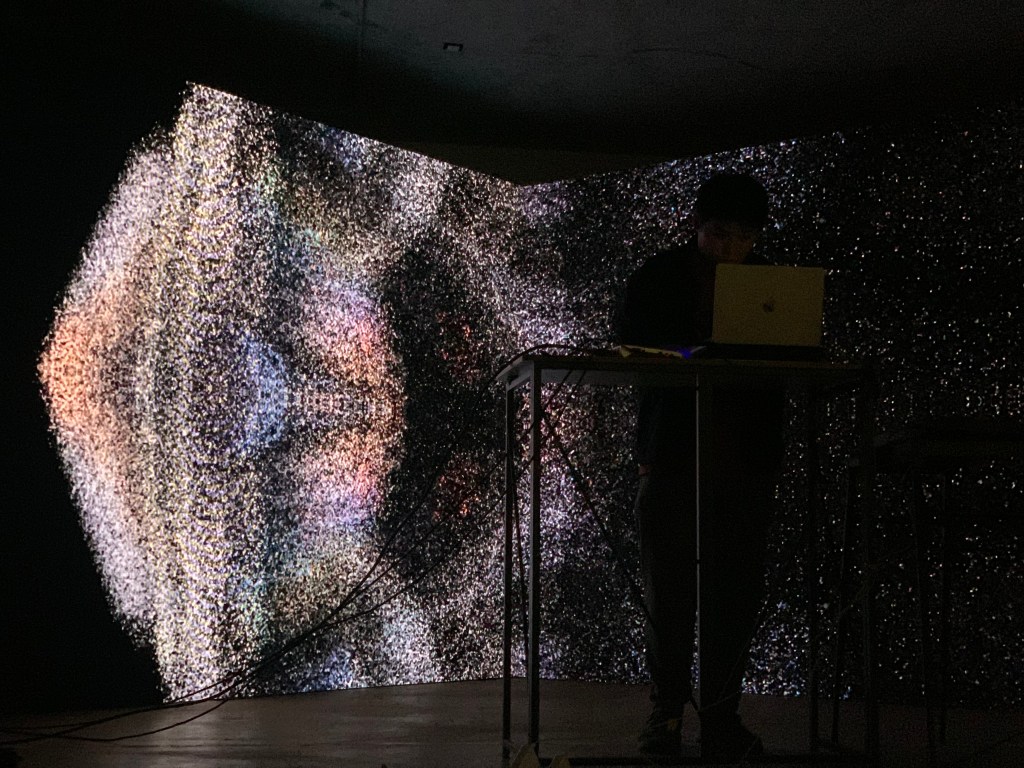
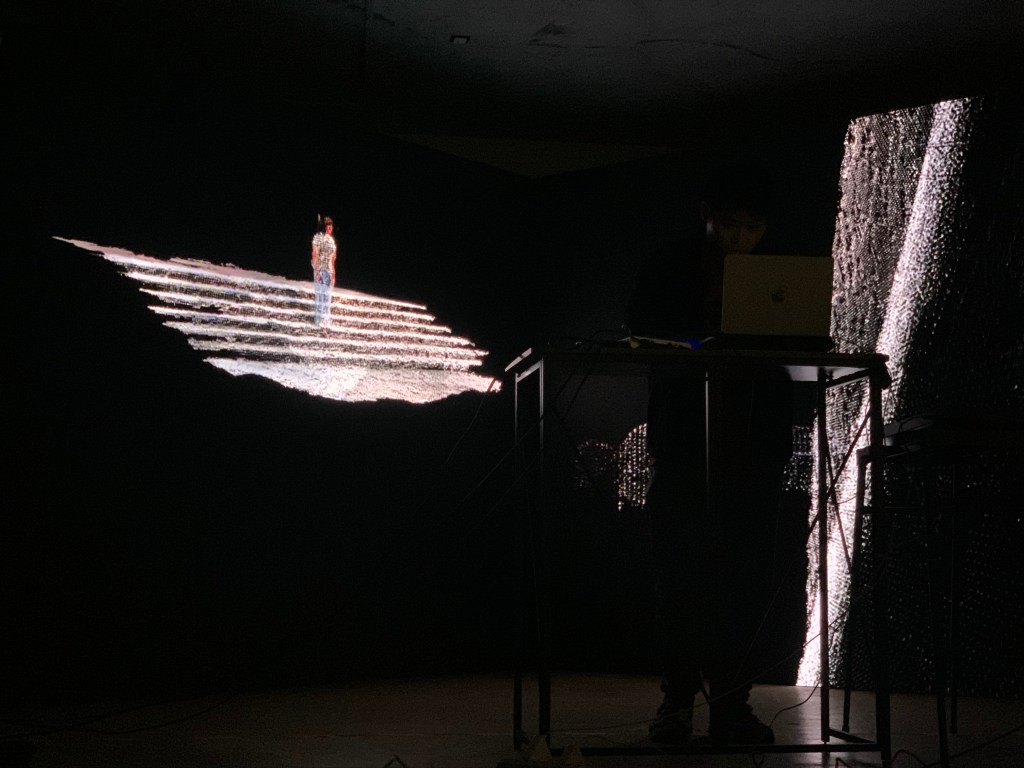
潮气:石老人与海
作品简介:
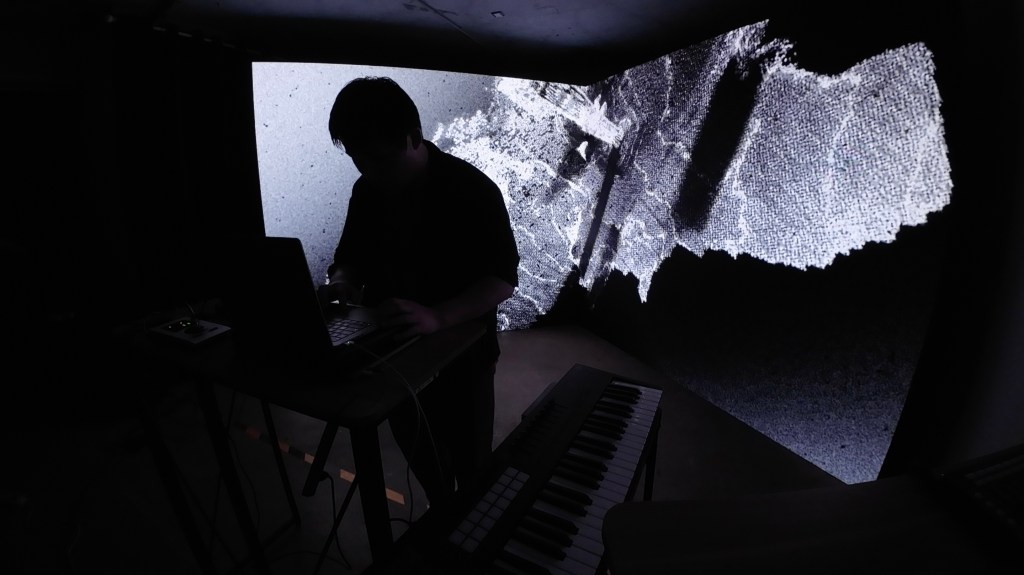
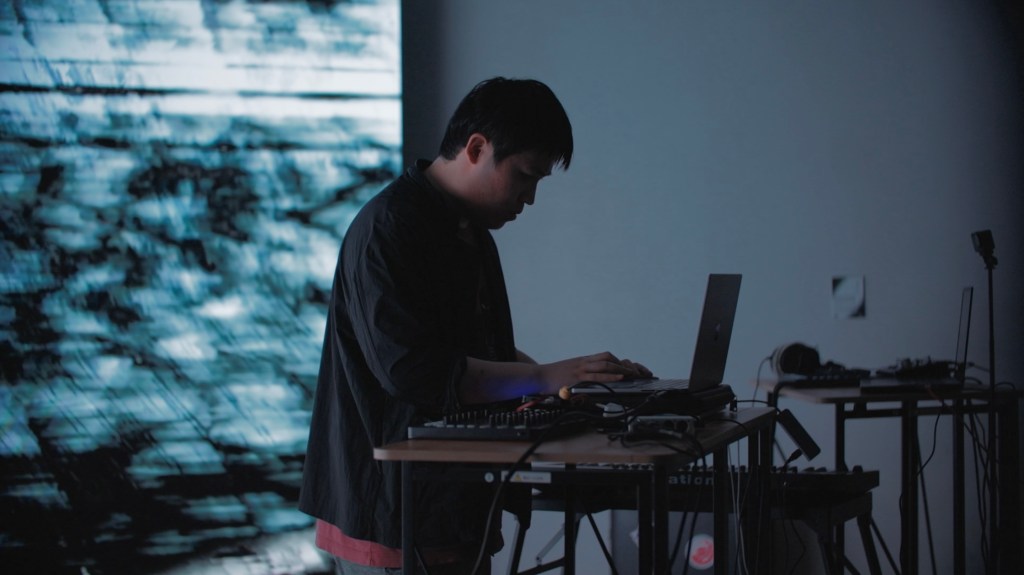
《潮气》是一部Audiovisual非叙事影音作品。作品的创作动机来源于青岛标志性的天然景观“石老人”因海水侵蚀而倒塌的新闻。“石老人”融合了民俗神话、城市历史以及市民们的集体记忆,是青岛城市文化的重要象征。
本作尝试探讨一些在当下日益普遍的情境,即:现代化的过程逐渐消解了人们对待自然景观这类“实体之物”的文化情感,也让原有的文化符号在资本主义文化语境下逐渐“失真”。
以“石老人”为例,技术进步使得人们对自然景观的认知更多地通过社交媒体和影像资料来获取相关的信息,而非在文化符号的“现场”进行认识和感知。“石老人”逐渐从一个具体的景观变成了抽象的观念。传统民俗神话在农业社会中承担的社会文化意义也在今天“现代性”的语境中逐渐被消解和祛魅。
作为实体的自然景观,“石老人”的倒塌刺破了传统神话的“真实”和现实中日益“失真”的文化符号的界限。《潮气》尝试基于法国诗人马拉美(Stéphane Mallarmé 1842-1898)的象征主义手法来编排声音与视觉:例如对青岛本地的环境声音和地方戏剧“柳腔”进行声音采样,在此基础上组织起实验性的电子音乐;同时对使用不同摄影手法拍摄的植物、建筑、交通、灯光、海滨等影像素材,通过编程语言来进行处理。
本作品分为”秩序“、“记忆”、“神话”三个章节,作者借用“石老人”文本中“等待”和“未到来”的概念,构建了一种无限接近真实的拟态。观众在这段视听体验中的身份是“他者”,同时也是“石老人”本身。经过抽象化处理的影像和声音表达了现代性语境下对自然环境感知的逐渐失真。这种动态的体验又和神话文本中“等待未到来的体验“形成意义上的呼应(互文)。表达作者对上述现象的反思和批判。
作品背景:
“石老人”是青岛市东部海岸的一座天然形成的海蚀柱(Marine Stack),其名称来源于它的形状如同一位坐在海中的老人。石老人是青岛著名的观光地,附近的岩石地质大约有10亿年的历史,因为海水的侵蚀,这一篇区域从岬角(Cape)逐渐变成海蚀洞(Matainaka Cave),最后只剩下“石老人”孤独地矗立在海上。青岛作为城市的历史开始于19世纪末,然而“石老人”的人文记录可以追溯到唐朝(Tang Dynasty,7th~9th Century,China),清朝初年(Early Qing Dynasty, Late 17th Century)时期的文学家通过整理崂山地区的民间口头文学(Folk oral literature)才开始将石老人的传说流传于世。在本地的民俗传说中,石老人原本是一位渔夫,为了拯救被海底恶龙掳走的女儿与之抗争,却反被恶龙的法术变为石像,只得在海边孤独地守望。一直以来,“石老人”都是青岛历史与文化的象征,2022年10月,石老人海蚀柱因海水侵蚀而倒塌。
第一章:秩序:私控符域
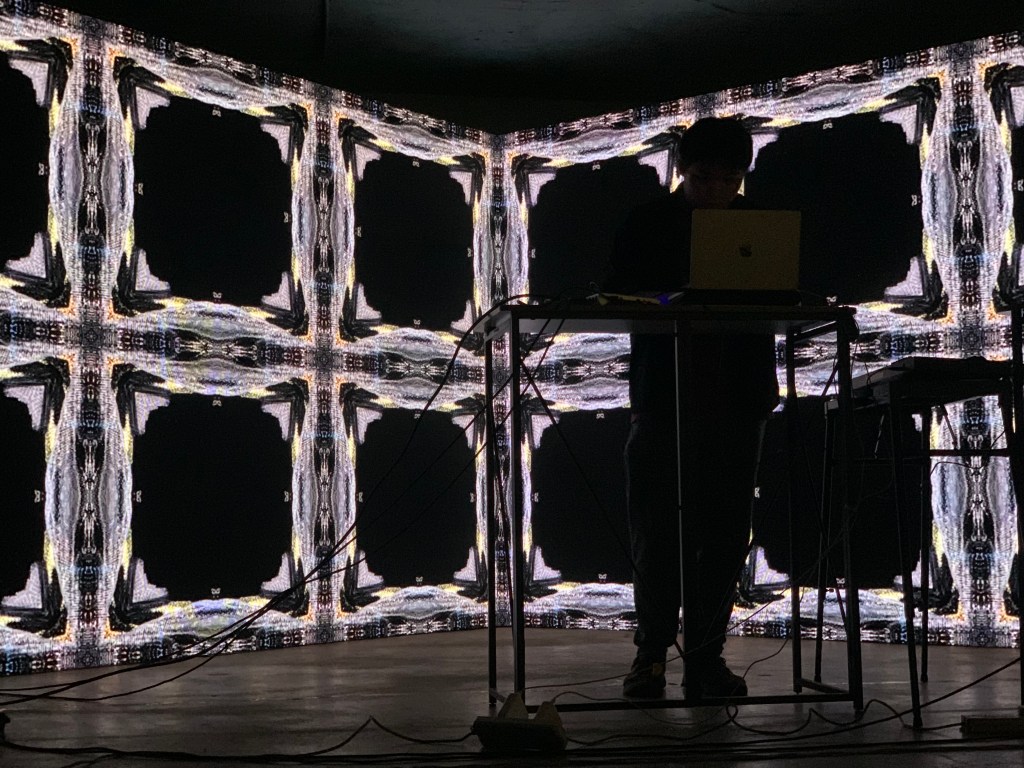
私控符域是“资本(控制)的”、”控制论“和”城市化“几个意象的组合。声音由一段4/4拍的电子音乐构成,使用了合成器、钢琴、电吉他等乐器来构建“故障音乐”(Glitch)、“噪音”(Noise)和“调性音乐”(Tonal)的声响效果。
“故障音乐”通过模拟或数字的失真效果和低保真的音频处理方式,上承未来主义宣言中“噪音的艺术”,中续刀根康尚(Tone Yasunao)使用刮花的CD进行的即兴噪音,下启Alva Noto、 池田亮司(Ikeda Ryoji)等艺术家。
这种节奏和调性是流行音乐(Popular Music)的常见模式。20世纪以降的流行文化工业中,它象征着高度的可复制性(贾克.阿达利)和艺术生产走向非标准化的过程,即福特主义(Fordism)到后福特主义(Post-Fordism)的变迁(毛利嘉孝《流行音乐与资本主义》)。
视觉上尝试用声音来驱动一些抽象的图形、城市建筑空间的影像与模型、移动的城市道路影像来表达城市化和工业化对人类生活空间的规训。
第二章:记忆:失真风景
这是一段具有氛围感的视听片段,作者使用了工业噪音类的音效素材(SFX),失真吉他和波表合成器(Wavetable)来模拟雨、金属等其他类型的“噪音”。两段海浪声来自两段手机录制的低保真田野录音(field recording),分别来自青岛即墨地区海边的海风和青岛石老人海滩的海浪声。
即墨的行政历史可以追溯到秦朝(Qin Dynasty,221-207 B.C.),是胶东地区最古老的城市区域。这两段录音象征着青岛城市的历史和自然风景。
低保真(Lo-Fi)的录音态度是与声景(Soundscape)创始人M.Schafer所主张的“声音生态”(acoustic ecology)相反。它指出了一个技术盲区,即人们使用录音器材对自然声音进行100%的记录和还原是不可能的,因为任何录音介质和信号传输都会造成声音信息的丢失。
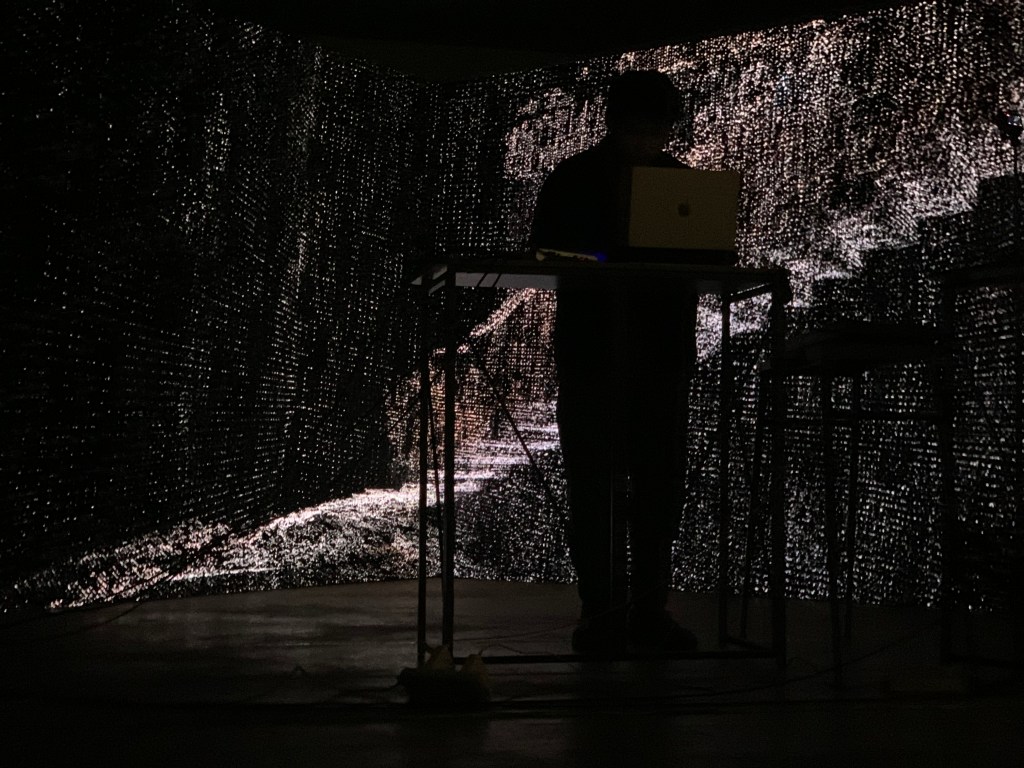
在视觉上,作者受到以中国的宋代绘画(Song Dynasty Painting)和日本浮世绘(Ukiyoe)为代表的东洋木版画(East Asia Woodblock Print)的影响,使用Touchdesigner对青岛海边的摄影素材进行一种动态的、模糊化的视觉处理。
第二章构建了一段有环境历史感的视听风景,但通过视听技术的处理,作者为这一风景添加了“失真”的色彩。表达人类社会在工业化的过程中,数字技术”过度地介入人们对自然、对生活、对历史的认知与接触“这一现象的批判与思考。
第三章 神话:潜至深处(Myth:Diving to the deep)
第三章尝试在“石老人”民俗神话的文本基础上展开想象,构建了一段老人试图潜入大海深处寻回女儿的情景。在此期间,观众将经历各类”视听幻象“,从具象的海洋声景到抽象的龙宫幻景,最终从海底(传说)返回到海面(现实)。
作者采用了声音设计的手法,和前两段共同构成了“节奏——无序”以及“调性——无调性”的对比。本段落在内容上因使用了大量的音效素材(SFX)而显得相对具体;然而比起前两段来,它又因构建了一种非声景、非调性的超现实体验而显得更为抽象。
“神话”作为文本,通过讲述“降临”(Coming)的观念来表达了人们对于未到来的体验的期待。“龙宫”在东亚的神话中占有重要的地位,它既是“龙王”的住所,也象征着对大海、河流、雨水等“人类无法掌控的自然现象”的控制,即秩序与不确定性的集合体。
“石老人”作为自然景观和文化符号,起到了连接人类社会与自然环境的作用。然而,这种功能已经在今天的工业社会语境下逐渐变得模糊,神话的神圣性也随之消解。作者希望通过这部作品的视听体验,重建人们对具体事物的情感认知,以及对资本主义论述的反思。
Moist: The Stone Old Man and Sea
Introduction
“Moist” is a non-narrative audiovisual work. The creation of the work was motivated by the news that Qingdao’s iconic natural landscape Stone Old Man collapsed due to seawater erosion. “Stone Old Man” is an important symbol of Qingdao city culture, integrating folk mythology, urban history and the collective memory of citizens.
This work attempts to discuss some situations that are becoming increasingly common today.For example, the process of modernization has gradually dissolved people’s cultural feelings towards “physical objects” such as natural landscapes, and has gradually “distorted” the original ancient cultural symbols in the context of capitalist culture.
Taking “Stone Old Man” as an example, technological progress makes people’s cognition of natural landscapes more likely to obtain relevant information through social media, rather than understanding and perceiving in the “scene” of cultural symbols. “Stone Old Man” gradually changed from a concrete landscape to an abstract idea. The social and cultural significance of traditional folk mythology in agricultural society is gradually dispelled and disenchanted in the context of today’s “modernity”.
As a physical natural landscape, the collapse of “Stone Old Man” punctures the boundary between the “truth” of traditional mythology and the increasingly “distorted” cultural symbols in reality. “Moisture” tries to arrange sound and vision based on the symbolism of French poet Stephane Mallarme (1842-1898). For example, it samples the local environmental sounds of Qingdao and the local drama “Willow Cavity” to organize experimental electronic music on this basis. At the same time, plants, buildings, traffic, lighting, seaside and other image materials taken by different photographic methods are processed through programming languages.
This work is divided into three chapters: “Order”, “Memory” and “Myth”. By borrowing the concepts of “waiting” and “not coming” in the text of “Stone Old Man”(which is also the main theme of general mythology), the author constructs a mimicry that is infinitely close to reality. The identity of the audience in this audio-visual experience is “the other”, but also “the old man Stone” itself. Abstract images and sounds express the gradual distortion of the perception of the natural environment in the context of modernity. This dynamic experience in turn forms a meaningful echo (intertextuality) of the mythical text “waiting for the experience of not coming”. Express the author’s reflection and criticism on the above phenomenon.
Background
” Stone Old Man” is a naturally formed Marine Stack on the east coast of Qingdao City, and its name comes from its shape like an old man sitting in the sea. Stone Old Man is a famous tourist spot in Qingdao, the nearby rock geology has about 1 billion years of history, because of the erosion of the sea, this area from the Cape gradually into the sea erosion Cave (Matainaka Cave), and finally only the “old man” standing alone in the sea. The history of Qingdao as a morden city began at the end of the 19th Century, but the humanistic record of “Stone Old Man” can be traced back to the Tang Dynasty (7th~9th Century, China). In the Early Qing Dynasty (Late 17th Century), writers began to spread the legend of “Stone Old Man” by collating Folk oral literature in the Laoshan area. In local folktale, the old man was originally a fisherman who fought to save his daughter from being taken by a evil dragon under the sea, but was turned into a stone statue by the dragon’s magic and had to watch alone on the beach. The Stone Old Man has been a symbol of Qingdao’s history and culture for over 100 years. In October 2022, the Stone Old Man sea stack collapsed due to seawater erosion.
Chapter One, Order: Capital Cybernisation
The title Cybernisation is a combination of cybernetics and urbanisation. This part based on a 4/4 beat electronic music with synth, piano, ele-guitar to produce a tonal voice and glitch sound in an one piece.
With an analog/digital distortion effect and lo-fi audio procesing, the roots of glitch music can be traced back from the futurist manifesto”the art of noise” to the Fluxus Tone Yasunao who break or scratch a CD to profuce a improvisation noise effect, and today’s artist like Ikeda Ryoji or Alva Noto.
The 4/4 beat is the most regular music pattern in popular music. In the context of popular cultural industry after 20th-century, it symbolizes a highly repeating(Jacque Attari) and the progress from standardization to customization which means Fordism to Post-Fordism(Mohri Yoshitaka).
As for the visual, the author tried to use some audio-reactive abstract graph and moving image of Qingdao city.These audio-visual combination emphasize a discipline of urbanization and industrialization on human living space.
Chapter Two, *Memory:Distorted Landscape
This is an ambient audiovisual clip in which the authors use industrial noise-like sound material (SFX), distortion guitars, and Wavetable synthesizers to simulate other types of “noise” such as rain and metal. The two wave sounds come from two low-fidelity field recordings recorded by iPhone, respectively from the sea breeze of Qingdao Ji-mo area and the wave sound of Qingdao Stone-OldMan(Shi LaoRen) Beach.
With an administrative history dating back to the Qin Dynasty (221-207 B.C.), Jimo is the oldest urban area in Qingdao region. These two recordings symbolize the history and natural scenery of Qingdao city.
The Lo-Fi recording attitude is the opposite of the “acoustic ecology” advocated by M. Schchafer, founder of Soundscape. It points out a technical blind spot, that is, it is impossible for people to use recording equipment to record and restore 100% of natural sound, because any recording medium and signal transmission will cause the loss of sound information.
Visually, the author was influenced by East Asia Woodblock Print(Mokuhanka), represented by Chinese Song Dynasty Painting and Japanese Ukiyoe. Touchdesigner is used to carry out a dynamic and blurred visual processing of Qingdao seaside photography materials.
The second chapter constructs an audio-visual landscape with a sense of environmental history, but through audio-visual technology processing, the author adds “distorted” colors to this landscape. In the process of industrialization of human society, digital technology is excessively involved in people’s cognition and contact with nature, life and history.
Chapter Three, Myth:Diving to the deep
This Chapter is trying to extend the origin Stone-Old-Man story in order to constract a scene that the old man attempted to dive into the deepest sea to find his daughter.During this period, the audience will experience different kind of “audio-vision-illusion” which cover the concrete soundscape and the abstractive Dragon Palace, the legend myth and the reality.
The author uses the technique of sound design, and the first two paragraphs together constitute the contrast of “rhythm – disorder” and “tonality – atonality”. This paragraph is relatively specific in content due to the extensive use of sound effects (SFX); However, compared with the first two paragraphs, it is more abstract because it constructs a non-soundscape, non-tonal surreal experience.
Myth, as a text, expresses the expectation of an experience not yet to come by telling the idea of Coming. The “Dragon Palace” occupies an important place in East Asian mythology, both as the residence of the “dragon king” and as a symbol of control over “natural phenomena beyond human control” such as the sea, rivers, and rain, that is, the combination of order and uncertainty.
As a natural landscape and cultural symbol, “Stone old man” has played a role in connecting human society and natural environment. However, this function has gradually become blurred in the context of today’s industrial society, and the sanctity of mythology has also been dissolved. Through the audio-visual experience of this work, the author hopes to reconstruct people’s emotional cognition of concrete things and reflect on the discourse of capitalism.
 LIU Chen